
Sustainable Logistics: Green Transportation and Eco-Friendly Supply Chain Strategies
Discover how sustainable logistics can help businesses reduce transportation emissions, optimize delivery routes, improve packaging efficiency, and build more environmentally responsible supply chains without overlooking cost and service requirements.
Sustainable Logistics: Green Transportation and Eco-Friendly Supply Chain Strategies
Introduction
Sustainability has become an important consideration for businesses managing transportation, warehousing, packaging, and international freight. As supply chains grow more complex, companies are exploring ways to reduce environmental impacts while maintaining reliable deliveries and controlling operating costs.
Sustainable logistics focuses on planning and managing the movement and storage of goods in ways that use resources more efficiently and reduce avoidable waste and emissions.
From optimizing transportation routes to improving packaging and selecting suitable freight modes, businesses can adopt practical measures to make their logistics operations more environmentally responsible.
What Is Sustainable Logistics?
Sustainable logistics refers to logistics practices designed to reduce environmental impacts while supporting operational efficiency and responsible resource use.
It considers the environmental effects of transportation, storage, packaging, material handling, and distribution throughout the supply chain.
Common sustainable logistics initiatives include:
Improving vehicle and freight utilization.
Reducing unnecessary transportation movements.
Optimizing delivery routes and shipment schedules.
Using packaging materials more efficiently.
Evaluating lower-emission transportation options.
Improving warehouse energy efficiency.
Measuring emissions and monitoring environmental performance.
The most suitable measures depend on the type of cargo, transportation distance, available infrastructure, service requirements, and business objectives.
Why Green Logistics Matters for Businesses
Green logistics can help businesses identify operational inefficiencies and make more informed decisions about transportation and resource consumption.
Improving Resource Efficiency
Better route planning, vehicle utilization, and shipment consolidation can reduce unnecessary mileage and improve the use of available transportation capacity.
These changes may also help control fuel consumption and certain operating costs.
Supporting Environmental Objectives
Transportation and warehousing consume energy and can contribute to greenhouse gas emissions. Reviewing logistics activities helps businesses identify where emissions may be reduced and where further measurement is needed.
Responding to Customer Expectations
Some customers and business partners consider environmental performance when evaluating suppliers and logistics arrangements.
Transparent sustainability practices can help companies communicate their approach more clearly, provided that environmental claims are supported by reliable evidence.
Strengthening Supply Chain Planning
Sustainability initiatives often involve better data, improved scheduling, and closer coordination between suppliers, carriers, warehouses, and customers.
These improvements can support both environmental objectives and day-to-day operational performance.
Key Strategies for Sustainable Transportation
Transportation is a major area of focus for businesses seeking to improve logistics sustainability. The following approaches can help organizations evaluate opportunities to reduce avoidable environmental impacts.
1. Optimize Transportation Routes
Route planning helps businesses identify efficient paths between suppliers, warehouses, distribution centers, and customers.
Reducing unnecessary distance, avoiding repeated trips, and coordinating delivery schedules can lower fuel use when other operating conditions remain comparable.
Businesses should also consider road conditions, vehicle restrictions, delivery windows, and the practical availability of alternative routes.
2. Improve Vehicle Utilization
Sending partially loaded vehicles when shipments could be safely consolidated may result in unnecessary journeys.
Where delivery schedules and cargo requirements permit, businesses can coordinate shipments to improve load utilization and reduce the number of trips required.
Consolidation decisions should also consider delivery deadlines, cargo compatibility, handling risks, and customer commitments.
3. Evaluate Lower-Emission Vehicles
Electric vehicles and other lower-emission transportation options may be suitable for certain delivery routes and operating environments.
Their practical suitability depends on vehicle capacity, distance, charging infrastructure, electricity sources, payload requirements, and total operating costs.
Businesses should assess the complete operating context before selecting a vehicle technology.
4. Choose Suitable Freight Modes
Road, rail, air, and ocean freight have different operating characteristics and environmental impacts.
For some suitable long-distance shipments, rail or ocean freight may offer lower transportation emissions per unit of cargo than air freight. However, the actual comparison depends on route, cargo weight, utilization, distance, and the method used to estimate emissions.
Businesses should evaluate the full transportation journey, including connecting road movements and transfer requirements, rather than comparing individual modes in isolation.
Sustainable Packaging and Cargo Protection
Packaging affects material consumption, shipment dimensions, transportation efficiency, and product protection.
Sustainable packaging aims to use appropriate materials and quantities while maintaining the protection required during storage, handling, and delivery.
Reduce Unnecessary Packaging
Oversized packaging can increase dimensional shipping charges and use more material than necessary.
Businesses can review package dimensions, remove unnecessary layers, and choose packaging that protects the product without adding avoidable bulk.
Evaluate Reusable Materials
Where operationally practical, reusable containers, pallets, and protective materials may reduce the need for single-use packaging.
Their benefits depend on return logistics, cleaning requirements, durability, and how frequently the materials can be reused.
Consider Recyclable Materials
Packaging made from recyclable materials may support waste reduction when suitable collection and recycling facilities are available.
Businesses should check material compatibility, local recycling infrastructure, product protection requirements, and destination-country rules.
Prevent Product Damage
Sustainability also involves avoiding unnecessary waste caused by damaged products and repeat shipments.
Appropriate cushioning, secure loading, suitable packaging, and careful handling can help prevent damage during transportation.
Building a Sustainable Warehouse
Warehouses support storage, order preparation, cargo handling, and distribution. Their energy use and resource requirements make them another area for sustainability improvements.
Improve Energy Efficiency
Energy-efficient lighting, appropriate equipment selection, preventive maintenance, and effective energy management can help reduce unnecessary electricity consumption.
Facilities should evaluate their actual operating patterns to identify the measures most likely to deliver practical benefits.
Reduce Waste
Inventory management and organized warehouse processes can help prevent product damage, packaging waste, and unnecessary material consumption.
Businesses can also establish suitable procedures for separating recyclable materials and managing operational waste.
Optimize Space and Movement
Effective storage layouts and inventory organization can reduce unnecessary internal movements and improve handling efficiency.
Warehouse design should balance space utilization with safe access, appropriate storage conditions, and operational requirements.
The Role of Technology in Green Logistics
Digital systems can help businesses understand how transportation and logistics resources are being used.
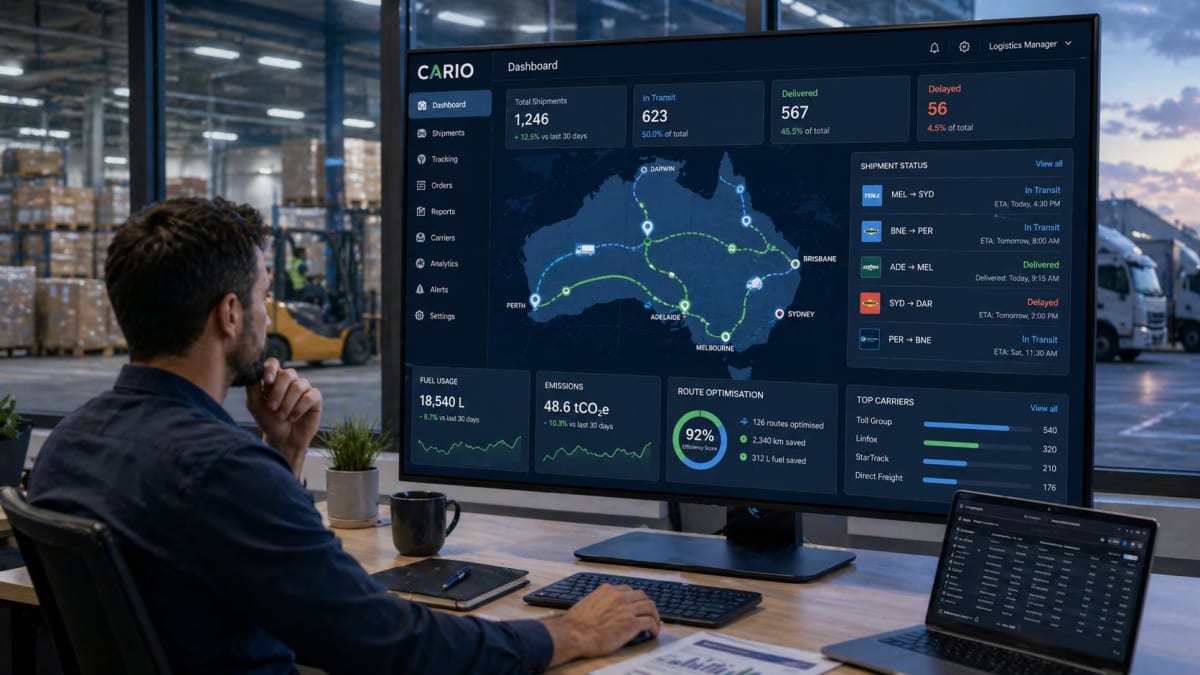
Route optimization software can compare possible delivery routes, while fleet management tools can monitor vehicle activity and identify inefficient journeys.
Warehouse management systems can improve inventory visibility and support better storage and picking processes. Shipment tracking tools can also help logistics teams coordinate deliveries and respond to disruptions.
Where suitable data is available, logistics teams can use digital records to monitor fuel consumption, shipment distances, vehicle utilization, and estimated transportation emissions.
Technology is most useful when information is accurate, measurement methods are consistent, and the resulting insights lead to practical operational improvements.
Measuring Sustainable Logistics Performance
Businesses need measurable indicators to understand whether their sustainability initiatives are delivering results.
Useful indicators may include:
Transportation emissions: Estimated greenhouse gas emissions associated with freight movements, calculated using an appropriate and consistent methodology.
Fuel consumption: The amount of fuel used by vehicles over a defined period or operating distance.
Load utilization: The extent to which available vehicle or freight capacity is being used.
Empty running: The proportion of vehicle travel undertaken without a revenue-generating or operationally necessary load.
Packaging material use: The amount and type of packaging material used per shipment or product.
Warehouse energy consumption: Energy used by warehouse facilities and associated equipment over a defined period.
Damage and return rates: Measures that can help identify avoidable waste associated with damaged products and repeated transportation.
Businesses should establish a baseline, define consistent measurement boundaries, and review performance over time. Environmental improvements should be assessed alongside service quality, safety, and financial performance.
Common Challenges in Implementing Green Logistics
Initial Investment
Some sustainability improvements require investment in vehicles, equipment, technology, infrastructure, or packaging redesign.
Businesses should assess expected operational benefits, implementation costs, and the time needed to achieve their objectives.
Limited Infrastructure
Charging facilities, rail connections, alternative fuels, and recycling services are not equally available across all locations.
The feasibility of sustainable alternatives therefore depends on the origin, destination, route, and local operating conditions.
Balancing Cost and Delivery Speed
Faster transportation options may be necessary for urgent or time-sensitive cargo, even when other modes could have different environmental advantages.
Businesses should evaluate sustainability alongside customer commitments, cargo characteristics, and the overall service requirement.
Inconsistent Environmental Data
Comparing emissions across different carriers and transport modes can be difficult when calculation methods, reporting boundaries, and data quality vary.
Organizations should use clearly defined measurement approaches and avoid making unsupported comparisons or environmental claims.
Practical Steps to Build a Greener Supply Chain
Businesses can begin improving logistics sustainability through a structured approach.
Review current operations. Identify major transportation activities, warehouse energy use, packaging requirements, and recurring sources of waste.
Establish a baseline. Collect available information about distances, fuel use, shipment volumes, packaging, and operational costs.
Identify improvement opportunities. Assess route optimization, load consolidation, suitable freight alternatives, packaging changes, and warehouse efficiency.
Set measurable targets. Define realistic objectives with clear timelines and consistent measurement methods.
Coordinate with logistics partners. Discuss transportation options, shipment planning, data availability, and relevant environmental performance information.
Implement changes gradually. Test suitable initiatives on selected routes, products, or facilities before expanding them.
Monitor results. Compare performance with the baseline and review any effects on costs, delivery reliability, and cargo safety.
Communicate transparently. Report progress accurately and distinguish measured outcomes from future ambitions.
A practical, data-driven approach allows businesses to improve sustainability without overlooking essential operational requirements.
How Logistics Partners Can Support Sustainability
Logistics partners can help businesses evaluate transportation options, coordinate shipments, improve planning, and identify opportunities to reduce unnecessary movement.
Depending on their services and available data, providers may also support shipment consolidation, transport-mode comparisons, tracking, and environmental performance reporting.
Businesses should discuss service capabilities, calculation methods, and reporting boundaries when assessing sustainability-related services.
The best logistics arrangements combine reliable cargo movement with realistic environmental objectives, suitable operating practices, and transparent communication.
Conclusion
Sustainable logistics is about making informed decisions that improve resource efficiency and reduce avoidable environmental impacts across transportation, warehousing, packaging, and distribution.
Businesses can begin by improving route planning, using transportation capacity more efficiently, selecting suitable freight modes, reducing packaging waste, and monitoring measurable performance indicators.
Although the right approach varies by shipment and operating environment, consistent planning and collaboration can help companies develop more responsible supply chains while maintaining reliable logistics operations.
Skylink Global supports businesses with freight forwarding and international logistics requirements, helping coordinate transportation arrangements according to shipment needs.
Frequently Asked Questions
What is green logistics?
Green logistics involves practices intended to reduce the environmental impacts of transportation, warehousing, packaging, and distribution while maintaining effective logistics operations.
How can businesses reduce transportation emissions?
Businesses can evaluate route optimization, improve vehicle utilization, consolidate suitable shipments, reduce unnecessary trips, and assess lower-emission transportation options where practical.
Is ocean freight always more sustainable than air freight?
Not in every situation. Ocean freight can have lower emissions per unit of cargo on some routes, but results depend on distance, cargo weight, vessel and aircraft utilization, connecting transport, and the calculation method.
How does sustainable packaging help logistics?
Appropriate packaging can reduce unnecessary material use, shipment volume, and waste while protecting products against damage during storage and transportation.
What technologies support sustainable logistics?
Route optimization tools, fleet management systems, warehouse management software, shipment tracking platforms, and emissions measurement tools can help businesses identify inefficiencies and monitor performance.
How can a business measure green logistics performance?
Businesses can monitor transportation emissions, fuel consumption, load utilization, packaging use, warehouse energy consumption, and other indicators using consistent methods and clearly defined reporting boundaries.
EXIM & Logistics Specialist at SkyLink Global Services. Specializing in statutory customs compliance, freight procurement, and international cross-border multimodal routing.