
Sustainable Logistics and the Future of Global Trade | SkyLink Global
Explore how sustainable logistics is transforming global trade through efficient freight transportation, optimized shipping routes, better warehouse management, reduced packaging waste, and responsible supply chain practices. Discover strategies to improve logistics performance, manage operational costs, and build more efficient international transportation networks.
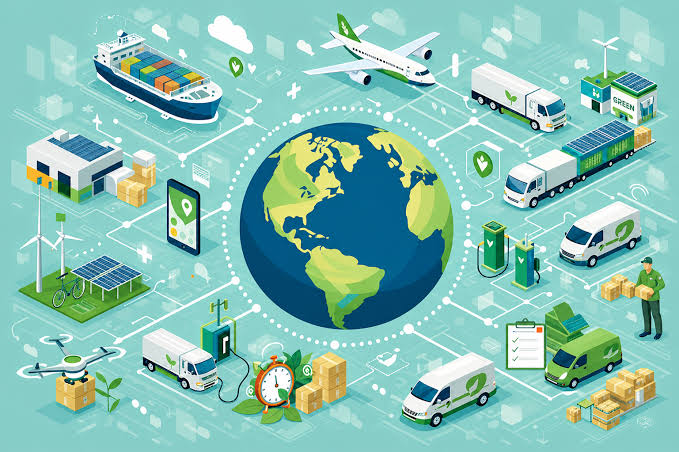
How Sustainable Logistics Is Building a More Efficient Future for Global Trade
Short Description: Sustainable logistics is transforming international trade by encouraging smarter transportation planning, fuel-efficient freight movement, optimized shipping routes, and responsible supply chain management. Discover how global businesses can reduce environmental impact, improve operational efficiency, manage transportation costs, and develop more resilient logistics networks through sustainable practices.
Introduction
Global trade plays an important role in connecting manufacturers, suppliers, distributors, and consumers across international markets. As international business activities continue to grow, the demand for reliable transportation, efficient cargo handling, and well-organized supply chain operations is also increasing. However, expanding logistics activities create new challenges related to fuel consumption, transportation expenses, resource utilization, and environmental responsibility.
Sustainable logistics is becoming an important approach for businesses that want to balance operational performance with responsible transportation practices. It focuses on improving how goods are stored, transported, handled, and distributed while reducing unnecessary resource consumption.
For international logistics companies, sustainability is no longer just an environmental consideration. It is also an opportunity to improve transportation planning, strengthen supply chain operations, and develop long-term business efficiency.
1. Understanding Sustainable Logistics
Sustainable logistics refers to the implementation of transportation and supply chain practices that aim to minimize environmental impact while maintaining efficient business operations.
It involves several activities, including fuel-efficient transportation, optimized freight routes, better warehouse management, reduced packaging waste, and improved utilization of cargo capacity.
Businesses can adopt sustainable logistics strategies at different stages of the supply chain. From selecting transportation partners to planning final deliveries, every operational decision can contribute to more responsible resource utilization.
The objective is to create a logistics system that supports commercial requirements while considering environmental and operational sustainability.
2. Optimizing Transportation Routes
Transportation route optimization is one of the most practical ways to improve logistics efficiency. Poorly planned routes can increase travel distances, fuel consumption, delivery time, and overall transportation expenses.
Businesses can evaluate different transportation routes by considering distance, road conditions, port locations, traffic patterns, shipment requirements, and delivery schedules.
Using appropriate route-planning systems helps logistics providers identify more efficient transportation arrangements.
For international cargo, route optimization may also involve selecting suitable ports, evaluating transit connections, and coordinating different freight transportation methods.
Better planning can reduce unnecessary transportation activities while improving delivery coordination.
3. Choosing the Right Freight Transportation Method
Different transportation methods have different operational characteristics and environmental impacts. Sea freight, air freight, road transportation, and rail freight each serve specific shipping requirements.
Sea freight is generally suitable for large cargo volumes and long-distance international shipments. Rail transportation can support efficient movement of goods across suitable inland networks. Road transportation provides flexibility for regional distribution and final deliveries, while air freight is useful when shipment urgency is a major priority.
Businesses should evaluate shipment weight, volume, delivery deadlines, destination, cargo type, and transportation availability before choosing a suitable method.
A well-planned combination of transportation methods can support more efficient cargo movement and better resource utilization.
4. Improving Warehouse and Inventory Efficiency
Sustainable logistics is not limited to transportation. Warehousing and inventory management also play an important role in supply chain performance.
Poor warehouse planning can increase energy consumption, storage requirements, product handling, and unnecessary movement of goods.
Businesses can improve warehouse efficiency through organized storage systems, appropriate inventory planning, energy-efficient equipment, and better utilization of available space.
Accurate inventory information also helps companies avoid excessive stock accumulation and unnecessary transportation activities.
When warehouse operations are properly coordinated with shipping schedules, businesses can improve order processing and maintain a more efficient flow of goods.
5. Reducing Packaging Waste in Global Shipping
Packaging is an important part of international transportation because it protects products during handling, storage, and long-distance movement.
However, excessive packaging can increase cargo volume, material consumption, and transportation requirements.
Businesses can explore suitable packaging materials, reusable packaging systems, and efficient product arrangement to reduce unnecessary waste.
Proper packaging dimensions also help improve container utilization and cargo space management.
For international shipments, packaging decisions should always consider product protection, handling conditions, destination requirements, and applicable regulations.
6. The Role of Technology in Sustainable Logistics
Digital technology is helping logistics businesses improve operational visibility and resource management.
Transportation management systems, shipment tracking platforms, warehouse management software, and data analytics tools provide useful information for planning and monitoring logistics activities.
These systems can help companies evaluate transportation performance, identify inefficient routes, manage shipment schedules, and improve coordination between different logistics partners.
Artificial intelligence and predictive analytics can also support demand forecasting and transportation planning.
With better information and improved decision-making, businesses can identify opportunities to reduce unnecessary resource consumption throughout their supply chains.
7. Building Responsible International Supply Chains
A sustainable supply chain requires cooperation between manufacturers, suppliers, freight forwarders, transportation providers, warehouses, and distributors.
Businesses should evaluate logistics partners based on their operational capabilities, service reliability, transportation practices, and commitment to responsible resource management.
Clear communication and consistent performance monitoring can help companies identify operational improvements.
Responsible supply chain management also includes maintaining accurate shipment documentation, following applicable transportation regulations, and ensuring appropriate cargo handling procedures.
A coordinated approach helps businesses build stronger international logistics networks.
8. Business Advantages of Sustainable Logistics
Sustainable logistics can support several long-term business objectives.
First, better route planning and transportation utilization can help reduce avoidable operating expenses. Second, improved warehouse organization can increase productivity and support more effective inventory management.
Third, digital monitoring systems provide greater shipment visibility and help businesses make informed operational decisions.
Companies may also strengthen their market reputation by demonstrating responsible business practices and responding to growing customer expectations regarding sustainability.
The results depend on the selected strategies, operational requirements, investment, and implementation quality.
9. Future Trends in Sustainable Global Transportation
The future of sustainable logistics will be influenced by cleaner transportation technologies, alternative fuels, electric commercial vehicles, intelligent freight management, and improved supply chain analytics.
Ports and logistics facilities are also exploring energy-efficient equipment and digital operational systems to improve resource utilization.
As international trade continues to evolve, businesses will increasingly need transportation strategies that consider both commercial performance and environmental responsibility.
Companies that invest in appropriate logistics improvements can prepare their supply chains for changing market expectations and future operational challenges.
Conclusion
Sustainable logistics is becoming an important part of modern international trade. Efficient transportation planning, better warehouse management, optimized packaging, digital monitoring, and responsible freight coordination can help businesses improve their supply chain operations.
Rather than focusing only on transportation speed, companies should consider the complete movement of goods, from the point of origin to the final destination.
SkyLink Global recognizes the importance of efficient international logistics and coordinated cargo transportation. By focusing on effective planning and organized logistics operations, businesses can strengthen their global supply chains and support a more efficient future for international trade.
EXIM & Logistics Specialist at SkyLink Global Services. Specializing in statutory customs compliance, freight procurement, and international cross-border multimodal routing.