
AI-Powered Logistics and Supply Chain: Transforming Global Shipping Operations
Explore how artificial intelligence is transforming logistics and supply chain management through predictive analytics, intelligent route planning, automated documentation, warehouse optimization, and real-time shipment visibility. Discover how AI-powered solutions help businesses improve operational efficiency, identify potential delays, manage logistics costs, and make more informed decisions across international shipping operations.
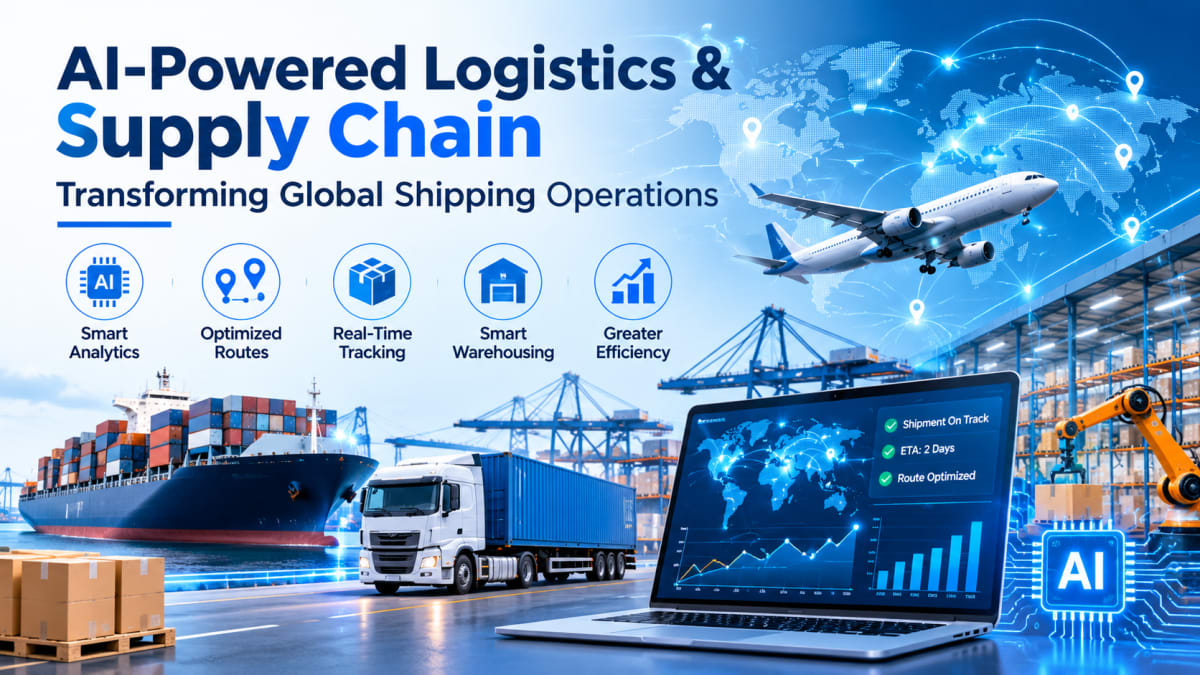
AI-Powered Logistics and Supply Chain: Transforming Global Shipping Operations
Introduction
Global logistics involves coordinating transportation, warehousing, documentation, inventory, and delivery across multiple locations. As supply chains become more complex, businesses need better ways to manage information, respond to unexpected disruptions, and make informed operational decisions.
Artificial intelligence (AI) is becoming an important technology in modern logistics. By analyzing large volumes of data, AI-powered systems can help businesses forecast demand, identify potential delays, optimize transportation routes, and improve operational planning.
For importers, exporters, freight forwarders, and logistics providers, AI offers opportunities to improve visibility and build more responsive supply chains.
What Is AI-Powered Logistics?
AI-powered logistics uses artificial intelligence, machine learning, predictive analytics, and automated data processing to support transportation and supply chain activities.
These technologies can analyze shipment histories, traffic conditions, inventory levels, weather information, and operational records to identify patterns and generate useful insights.
Instead of relying entirely on manual analysis, logistics teams can use these insights to evaluate alternatives, anticipate potential problems, and prioritize important tasks. Human supervision remains essential for validating recommendations and making decisions involving cost, safety, compliance, and customer requirements.
1. Intelligent Route Planning and Transportation Optimization
Transportation routes directly influence delivery schedules, fuel consumption, and freight costs. AI-powered route planning tools can analyze factors such as distance, traffic conditions, delivery windows, and historical transportation data to identify suitable routing options.
For international shipments, digital planning tools can also support comparisons between available transportation methods and routing alternatives.
Better planning helps logistics teams make informed decisions, coordinate deliveries, and respond to changing conditions. However, actual performance depends on data quality, transportation capacity, and operational constraints.
2. Predictive Analytics for Supply Chain Management
Predictive analytics uses historical and current data to estimate possible future outcomes. In logistics, these systems can help forecast product demand, identify potential capacity shortages, and estimate shipment delays.
For example, businesses can analyze historical order patterns to prepare inventory for periods of higher demand. Logistics teams can also use shipment information to identify routes or operational stages where delays occur frequently.
These insights support proactive planning and can reduce dependence on last-minute decisions. Predictions should still be reviewed alongside current market conditions and information from logistics partners.
3. Real-Time Shipment Tracking and Visibility
Shipment visibility is important for businesses managing international cargo across multiple transportation stages. AI can help analyze tracking updates, shipment milestones, estimated arrival times, and operational exceptions.
When integrated with suitable tracking systems, automated alerts can notify logistics teams about unusual delays or changes in expected delivery schedules.
Improved visibility supports better communication between exporters, importers, freight forwarders, and customers. It also helps businesses investigate disruptions and plan the next steps using more timely information.
4. Automated Logistics Documentation
International shipping requires accurate documentation, including commercial invoices, packing lists, shipping instructions, and customs-related records.
AI-powered document processing tools can extract information from documents, organize shipment data, and identify certain missing fields or inconsistencies. When combined with workflow automation, these tools can reduce repetitive administrative work and help teams process information more efficiently.
However, automated systems may misread documents or overlook important details. Human review is necessary, particularly for customs declarations, regulatory requirements, financial records, and other critical shipping documentation.
5. AI in Warehouse and Inventory Management
Warehouses must manage incoming goods, storage locations, inventory records, order preparation, and dispatch schedules. AI can help analyze demand patterns, recommend inventory allocation, and identify opportunities to improve warehouse space utilization.
When integrated with warehouse management systems, AI-supported tools can assist with stock forecasting, picking priorities, and workload planning.
These improvements can help businesses maintain more accurate inventory information, reduce unnecessary handling, and coordinate warehouse operations more effectively.
6. Freight Cost Optimization Through AI
Freight costs are influenced by transportation mode, cargo volume, route selection, fuel prices, seasonal demand, and additional handling requirements.
AI-powered analytics can compare historical freight data, identify cost patterns, and help logistics teams evaluate different transportation options. Businesses can use these insights when reviewing carrier performance, planning shipment consolidation, and assessing route alternatives.
The objective is not simply to select the cheapest option. Logistics teams must also consider transit time, cargo safety, reliability, customs requirements, and customer delivery commitments.
7. AI for Risk Management and Supply Chain Resilience
Unexpected disruptions can affect shipping schedules, inventory availability, and customer commitments. AI-supported risk analysis can help businesses identify patterns associated with delays, capacity constraints, and other operational problems.
By combining shipment data with relevant external information, businesses can evaluate potential risks and prepare alternative plans where appropriate.
For example, logistics teams may review alternative routes, adjust shipment schedules, or coordinate with transportation providers when disruptions are anticipated. AI can support these decisions, but reliable contingency planning and human judgment remain essential.
Challenges of Implementing AI in Logistics
Although AI offers valuable opportunities, successful implementation requires careful planning. Incomplete data, outdated systems, integration difficulties, and employee training requirements can limit its effectiveness.
Businesses should also consider data privacy, cybersecurity, system reliability, and the accuracy of automated recommendations.
A practical approach is to begin with a clearly defined problem, such as improving shipment visibility or reducing manual document processing. Companies can then measure results before expanding AI adoption across other operations.
How SkyLink Global Can Benefit from Digital Logistics
For businesses involved in international shipping, effective logistics management requires coordination between freight transportation, customs documentation, shipment tracking, and delivery planning.
AI-powered tools can complement these activities by improving data analysis, supporting operational decisions, and identifying potential disruptions earlier.
SkyLink Global focuses on international logistics, freight forwarding, EXIM consultancy, and supply chain coordination. Combining appropriate digital tools with experienced logistics management can help businesses improve shipment planning and maintain better visibility across their international trade operations.
Benefits of AI-Powered Logistics and Supply Chain Management
A well-planned AI strategy can offer several operational advantages:
Improved Planning: Supports demand forecasting and transportation decisions.
Better Shipment Visibility: Helps identify delays and monitor shipment milestones.
Reduced Manual Work: Automates selected repetitive data-processing tasks.
Cost Analysis: Helps identify opportunities to improve freight and warehouse efficiency.
Inventory Optimization: Supports stock planning and warehouse operations.
Risk Identification: Helps highlight potential supply chain disruptions.
Data-Driven Decisions: Provides useful insights for logistics teams and business managers.
The actual benefits depend on the quality of available data, the systems being used, and how effectively the technology is integrated into daily operations.
Conclusion
AI-powered logistics is changing how businesses plan shipments, manage warehouses, analyze freight costs, and coordinate international supply chains. Predictive analytics, automated document processing, intelligent route planning, and digital shipment visibility can help logistics teams work more efficiently.
However, AI delivers the greatest value when combined with reliable data, experienced professionals, appropriate technology, and clear operational processes.
For exporters, importers, and logistics providers, adopting AI strategically can support better planning, improve supply chain visibility, and strengthen preparedness for changing global trade conditions.
EXIM & Logistics Specialist at SkyLink Global Services. Specializing in statutory customs compliance, freight procurement, and international cross-border multimodal routing.