
Cold Chain Temperature Management: Best Practices for Safe Pharmaceutical and Perishable Cargo
Discover how effective cold chain temperature management helps protect pharmaceuticals, vaccines, food products, and other temperature-sensitive cargo during transportation and storage. Learn about real-time monitoring, refrigerated transportation, temperature data logging, risk management, and best practices that support product quality, regulatory compliance, and reliable international supply chain operations.
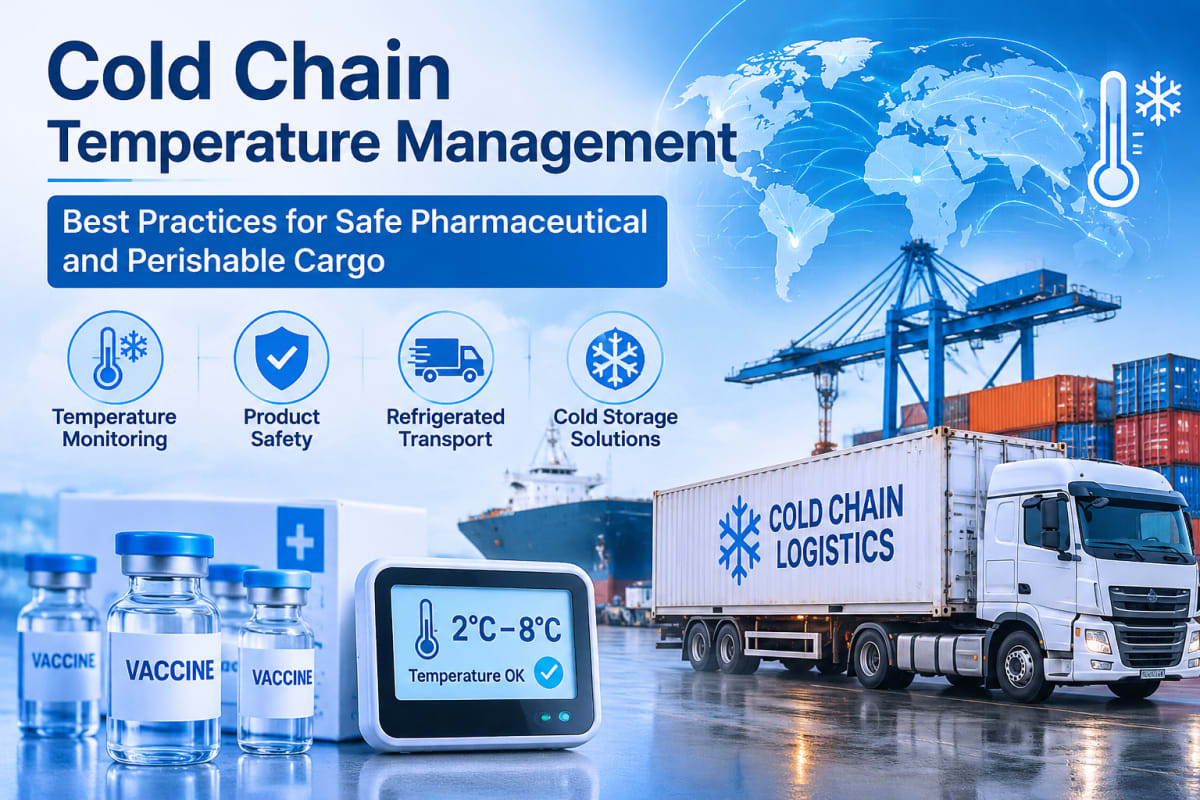
Cold Chain Temperature Management: Best Practices for Safe Pharmaceutical and Perishable Cargo
Introduction
Cold chain temperature management is an essential part of modern logistics, particularly for industries that transport pharmaceuticals, vaccines, food products, seafood, and other temperature-sensitive goods. Unlike ordinary cargo, these products may lose their quality or become unsuitable for use if exposed to inappropriate temperatures during storage or transportation.
As international trade continues to expand, businesses need reliable cold chain solutions that maintain suitable environmental conditions throughout the shipping process. Effective temperature management helps protect cargo quality, minimize avoidable losses, and improve supply chain reliability.
What Is Cold Chain Temperature Management?
Cold chain temperature management involves maintaining the required temperature conditions for sensitive products from their point of origin to their final destination. It includes refrigerated storage, temperature-controlled transportation, monitoring equipment, trained personnel, and documented handling procedures.
Different products require different temperature ranges. For example, certain vaccines require storage and transportation at +2°C to +8°C, while frozen seafood may require much lower temperatures. The appropriate conditions depend on the product's specifications and applicable handling requirements.
Maintaining the correct temperature throughout the journey is important because even a short exposure to unsuitable conditions can affect certain sensitive products.
Why Is Temperature Control Important in Logistics?
Temperature variations can affect product quality, safety, shelf life, and commercial value. In pharmaceutical logistics, improper handling may compromise sensitive medicines or biological products. In the food industry, inadequate temperature control can accelerate spoilage and increase the risk of product loss.
Reliable temperature management helps businesses maintain product integrity, reduce unnecessary waste, and meet applicable quality and regulatory requirements. It also provides greater confidence to manufacturers, exporters, importers, and customers who depend on consistent cargo handling.
Key Technologies Used in Cold Chain Management
1. Real-Time Temperature Monitoring
Temperature monitoring devices help logistics teams track environmental conditions during transportation and storage. Connected sensors can transmit readings to digital monitoring platforms, allowing authorized personnel to identify temperature deviations and respond promptly.
2. Data Loggers and Temperature Records
Data loggers record temperature readings over a period of time. These records help businesses review shipment conditions, investigate potential deviations, and maintain documentation for quality assurance.
3. Refrigerated Containers and Vehicles
Refrigerated containers, commonly known as reefer containers, and temperature-controlled vehicles help maintain suitable conditions for sensitive cargo. Proper equipment selection, pre-trip inspections, and correct temperature settings are important for reliable operations.
4. Digital Alerts and Shipment Visibility
Modern monitoring systems can generate alerts when temperature readings move outside predefined limits. Combined with shipment tracking, these alerts help logistics teams investigate issues and coordinate corrective action.
Best Practices for Maintaining the Cold Chain
Businesses can improve cold chain performance by following a structured approach to shipment preparation and monitoring.
Define Temperature Requirements: Confirm the product's approved temperature range before arranging transportation.
Prepare Cargo Properly: Use suitable packaging and preconditioning procedures according to product requirements.
Inspect Refrigeration Equipment: Verify the condition and operation of refrigerated containers before loading.
Monitor Conditions Continuously: Use appropriate monitoring equipment throughout the shipment journey.
Plan Transportation Routes: Consider transit times, port handling, customs clearance, and potential delays.
Maintain Documentation: Preserve temperature records, inspection reports, and deviation information.
Train Logistics Personnel: Ensure staff understand cargo handling procedures and escalation protocols.
These practices help reduce avoidable risks and improve coordination across the supply chain.
Challenges in International Cold Chain Transportation
International cold chain shipments may pass through multiple warehouses, ports, transport providers, and customs checkpoints. Each transfer creates an opportunity for delays or temperature deviations if handling procedures are not properly coordinated.
Power interruptions, equipment failures, inaccurate temperature settings, unexpected transit delays, and inadequate monitoring can also affect cargo conditions.
Businesses can address these challenges through contingency planning, equipment inspections, reliable logistics partners, and clear communication between all parties involved in the shipment.
Cold Chain Solutions for Pharmaceuticals and Perishable Goods
Pharmaceutical products often require carefully controlled transportation conditions and documented handling procedures. Vaccines, biological products, and certain medicines may have specific temperature requirements that must be followed throughout distribution.
Perishable products such as seafood, fruits, vegetables, and frozen foods also require suitable storage and transportation conditions. However, their temperature requirements differ according to the product and its intended use.
Selecting the correct refrigeration equipment, packaging, monitoring system, and transportation method is essential for maintaining product quality throughout the journey.
How SkyLink Global Supports Cold Chain Logistics
SkyLink Global provides logistics and supply chain solutions designed to support temperature-sensitive cargo movements. Effective cold chain operations involve coordinating refrigerated transportation, shipment milestones, monitoring requirements, port handling, and documentation.
For businesses involved in pharmaceutical exports, food shipments, or other temperature-sensitive international trade, a coordinated logistics approach can help improve shipment visibility and operational planning.
By combining appropriate transportation arrangements with monitoring and risk management practices, businesses can work toward more reliable cold chain operations.
Conclusion
Cold chain temperature management plays a vital role in protecting sensitive products during international transportation and storage. Proper equipment, real-time monitoring, temperature records, transportation planning, and trained personnel all contribute to a dependable cold chain.
For exporters, importers, and manufacturers, investing in suitable cold chain practices can help minimize avoidable losses, maintain product quality, and improve supply chain reliability. Choosing logistics solutions that match the product's specific requirements is an important step toward safer and more efficient global trade.
EXIM & Logistics Specialist at SkyLink Global Services. Specializing in statutory customs compliance, freight procurement, and international cross-border multimodal routing.