
Essential Customs Documentation for Smooth Import and Export Clearance
Discover the essential paperwork required for international shipments, from commercial invoices and packing lists to customs declarations and certificates of origin. Learn how accurate documentation helps importers and exporters maintain regulatory compliance, minimise clearance errors, and manage cross-border cargo movement efficiently.
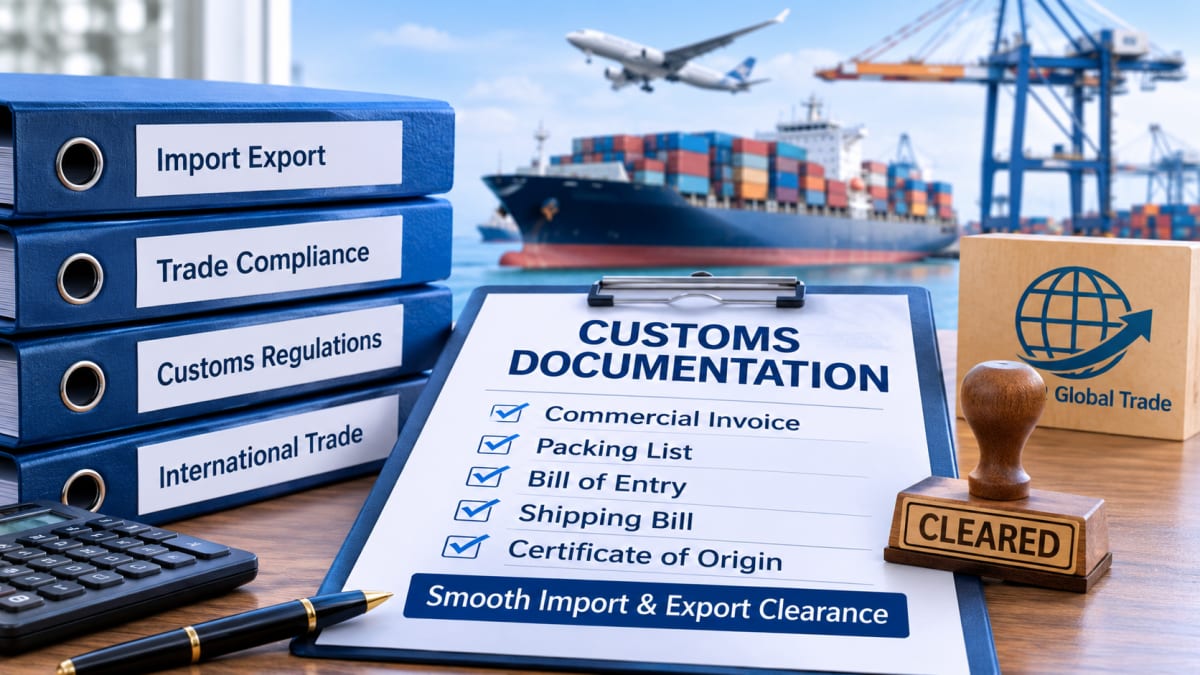
Essential Customs Documentation for Smooth Import and Export Clearance
Introduction
International trade requires more than finding buyers, negotiating prices, and arranging transportation. Every shipment crossing international borders must follow specific customs procedures and documentation requirements. For importers and exporters, maintaining accurate paperwork is essential for ensuring that goods move through customs without unnecessary complications.
From commercial invoices to shipping bills, each document serves a specific purpose in establishing shipment details, transaction values, product classifications, and regulatory compliance. Understanding these requirements allows businesses to manage their international logistics operations with greater confidence.
Why Customs Documentation Matters in International Trade
Customs documentation provides authorities with the information needed to examine shipments, verify declared values, calculate applicable duties, and confirm compliance with import-export regulations.
Incomplete paperwork, inconsistent product descriptions, or incorrect declarations can lead to additional verification, shipment delays, and unexpected operational costs. Businesses should therefore establish a systematic documentation process before dispatching their cargo.
Essential Documents Required for Import and Export
1. Commercial Invoice
A commercial invoice records the transaction between the exporter and importer. It includes seller and buyer information, product descriptions, quantities, unit prices, total invoice value, and applicable trade terms. Customs authorities use this information during shipment assessment.
2. Packing List
A packing list provides detailed information about the shipment's packaging. It generally includes package quantities, product-wise descriptions, gross weight, net weight, and dimensions. This document supports cargo identification and physical verification.
3. Bill of Entry
A Bill of Entry is an important customs declaration for imported goods in India. It contains information about the imported products, their classification, declared value, and applicable duty details. Accurate filing supports the assessment and clearance process.
4. Shipping Bill
A Shipping Bill is a principal customs document used for exporting goods from India. It contains details about the exporter, consignee, goods, declared value, and applicable export benefits or regulatory requirements.
5. Bill of Lading and Airway Bill
These transportation documents provide shipment-related information and serve as evidence of the contract of carriage. A Bill of Lading is generally associated with sea freight, whereas an Airway Bill is used for air cargo shipments.
6. Certificate of Origin
A Certificate of Origin identifies the country where exported goods originate. It can be particularly important when businesses claim preferential tariff treatment under applicable trade agreements.
Common Customs Documentation Mistakes to Avoid
Businesses involved in international trade should pay attention to several common documentation problems:
Incorrect product descriptions or HS code classification.
Differences between invoice values and customs declarations.
Mismatched quantities across invoices and packing lists.
Incorrect consignee or exporter information.
Missing certificates or supporting regulatory documents.
Delays in preparing and submitting mandatory paperwork.
Regular document verification can help identify discrepancies before shipment processing begins.
How Professional EXIM Support Improves Documentation Management
Managing international trade paperwork requires coordination between exporters, importers, customs brokers, freight forwarders, and other service providers.
Professional EXIM support can help businesses organise shipment records, review documentation, understand applicable procedures, and coordinate customs-related activities. A structured approach also improves communication between different departments involved in international cargo movement.
Conclusion
Customs documentation is a fundamental part of successful import-export operations. Accurate invoices, properly prepared declarations, and complete supporting records help businesses manage regulatory requirements and avoid preventable clearance complications.
For companies expanding into international markets, investing in organised documentation practices is an important step towards building reliable and efficient global trade operations.
EXIM & Logistics Specialist at SkyLink Global Services. Specializing in statutory customs compliance, freight procurement, and international cross-border multimodal routing.