Global Trade Compliance: Essential Guidelines for Successful International Import and Export
Understand the importance of global trade compliance, international trade regulations, customs documentation, shipping requirements, and export-import procedures to avoid delays, reduce risks, and manage cross-border business operations efficiently.
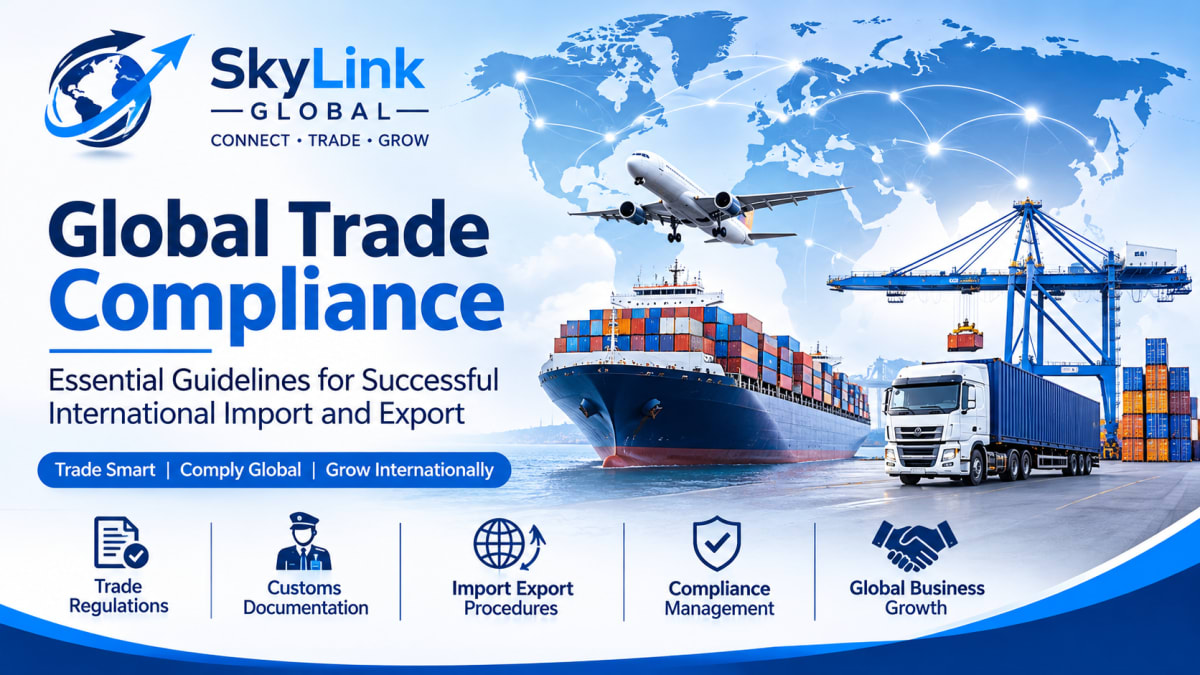
Global Trade Compliance: Essential Guidelines for Successful International Import and Export
International trade has become an important part of modern business growth. Companies regularly import raw materials, export finished products, and establish partnerships across different countries to expand their market presence. However, conducting business internationally involves more than finding buyers and arranging shipments. Businesses must also understand and follow various trade regulations, customs procedures, documentation requirements, and international shipping standards.
Global trade compliance helps importers and exporters conduct cross-border transactions legally, efficiently, and responsibly. A well-organized compliance process reduces operational risks, prevents unnecessary delays, and helps businesses maintain reliable international trade relationships.
1. Understanding Global Trade Compliance
Global trade compliance refers to following the laws, regulations, procedures, and documentation requirements that apply to international imports and exports.
Every country has its own rules regarding imported products, export permissions, customs duties, product classifications, restricted goods, and trade agreements. Businesses involved in international transactions must understand the regulations applicable to both the exporting and importing countries.
A proper compliance strategy helps companies maintain accurate records, submit correct declarations, and ensure that goods move through international supply chains without avoidable regulatory complications.
2. Importance of Accurate Import and Export Documentation
Documentation is one of the most important parts of international trade. Incorrect, incomplete, or inconsistent documents can create customs clearance problems, shipment delays, additional costs, and disputes between trading partners.
Common documents used in international trade include:
Commercial Invoice: Provides details about the seller, buyer, products, quantities, prices, and transaction value.
Packing List: Describes the packaging details, weight, dimensions, and contents of a shipment.
Bill of Lading: Serves as an important transport document for ocean freight shipments.
Air Waybill: Provides shipment and transportation information for air cargo.
Certificate of Origin: Identifies the country where the exported goods originate.
Shipping Bill: Used for export customs procedures in India.
Bill of Entry: Used for import customs clearance in India.
The exact documents required depend on the product, destination, transportation method, and applicable trade regulations. Businesses should verify requirements before dispatching shipments.
3. Understanding Customs Regulations and Product Classification
Customs authorities examine imported and exported goods to determine their classification, applicable duties, regulatory requirements, and eligibility for clearance.
The Harmonized System (HS) is an internationally recognized product classification framework used to identify traded goods. Correct HS classification is important because it influences customs duties, trade statistics, documentation, and certain regulatory requirements.
Incorrect classification may result in duty discrepancies, shipment holds, penalties, or additional scrutiny.
Importers and exporters should maintain accurate product descriptions, verify applicable tariff classifications, and consult qualified customs professionals whenever classification requirements are unclear.
4. Managing Customs Duties, Taxes, and Trade Costs
Customs duties and taxes directly influence the total cost of international transactions. Businesses should calculate their potential import and export expenses before finalizing commercial agreements.
The overall landed cost may include:
Product purchase or manufacturing cost.
International freight charges.
Insurance expenses.
Customs duties and applicable taxes.
Port handling and terminal charges.
Customs clearance and documentation fees.
Inland transportation and delivery expenses.
Understanding these costs helps businesses prepare realistic quotations, establish competitive pricing, and avoid unexpected financial pressure.
Companies should also evaluate applicable preferential trade agreements and duty benefits where eligible. Proper documentation and compliance with the relevant rules of origin are essential when claiming such benefits.
5. Following International Shipping and Trade Regulations
International shipments may pass through multiple countries, ports, transport operators, and customs authorities before reaching their destinations. Businesses must consider the regulations applicable to each stage of transportation.
Depending on the product and destination, additional requirements may involve product certifications, quality inspections, health certificates, safety standards, packaging regulations, or special permissions.
Certain goods may also be subject to export controls, sanctions, restricted-party screening, or licensing requirements.
Before arranging transportation, businesses should verify the latest applicable regulations and ensure that all necessary approvals are available.
6. Common Global Trade Compliance Challenges
Importers and exporters frequently encounter challenges that can affect their international operations.
Some common issues include:
Changes in customs rules and import policies.
Incorrect product classification.
Missing or inconsistent shipping documents.
Delays in regulatory approvals.
Unexpected customs duties and additional charges.
Limited understanding of destination-country requirements.
Communication gaps between suppliers, freight forwarders, and buyers.
These challenges can be reduced through proper planning, professional documentation management, regular regulatory monitoring, and effective coordination among all parties involved in the supply chain.
7. How Technology Improves Trade Compliance Management
Digital technology is making international trade management more organized and transparent. Businesses can use modern software platforms to manage documents, monitor shipment progress, maintain transaction records, and coordinate with logistics partners.
Digital document management reduces dependence on manual paperwork and makes important trade information easier to access. Automated notifications and shipment tracking tools also help teams identify potential delays and respond quickly.
Companies handling multiple international shipments can benefit from centralized systems that connect procurement, logistics, inventory, customs documentation, and financial operations.
Technology does not replace regulatory expertise, but it helps businesses manage compliance activities more consistently.
8. Building a Reliable Global Trade Compliance Strategy
An effective compliance strategy should be part of everyday business operations rather than something addressed only when a shipment encounters a problem.
Businesses should establish clear documentation procedures, assign responsibilities to relevant teams, review regulatory updates, and maintain records of international transactions.
Working with experienced freight forwarders, customs brokers, and international logistics professionals can also help businesses understand complex shipping requirements and manage cross-border operations more efficiently.
Conclusion
Global trade compliance is essential for businesses involved in international import and export activities. Accurate documentation, correct product classification, customs duty planning, and awareness of international regulations help companies minimize operational risks and maintain smooth supply chain operations.
As global markets continue to evolve, businesses need a structured approach to managing trade requirements. With effective planning, reliable logistics coordination, and the right technology, importers and exporters can strengthen their international operations and build sustainable global business relationships.
EXIM & Logistics Specialist at SkyLink Global Services. Specializing in statutory customs compliance, freight procurement, and international cross-border multimodal routing.