
How Advanced Cold Chain Solutions Help Reduce Product Loss and Improve Supply Chain Efficiency
Advanced cold chain solutions help businesses minimize product losses, maintain temperature stability, and improve supply chain efficiency. Discover how real-time monitoring, smart refrigeration, predictive maintenance, and effective inventory management help pharmaceutical companies, food distributors, and exporters protect temperature-sensitive products while reducing operational costs and improving delivery performance.
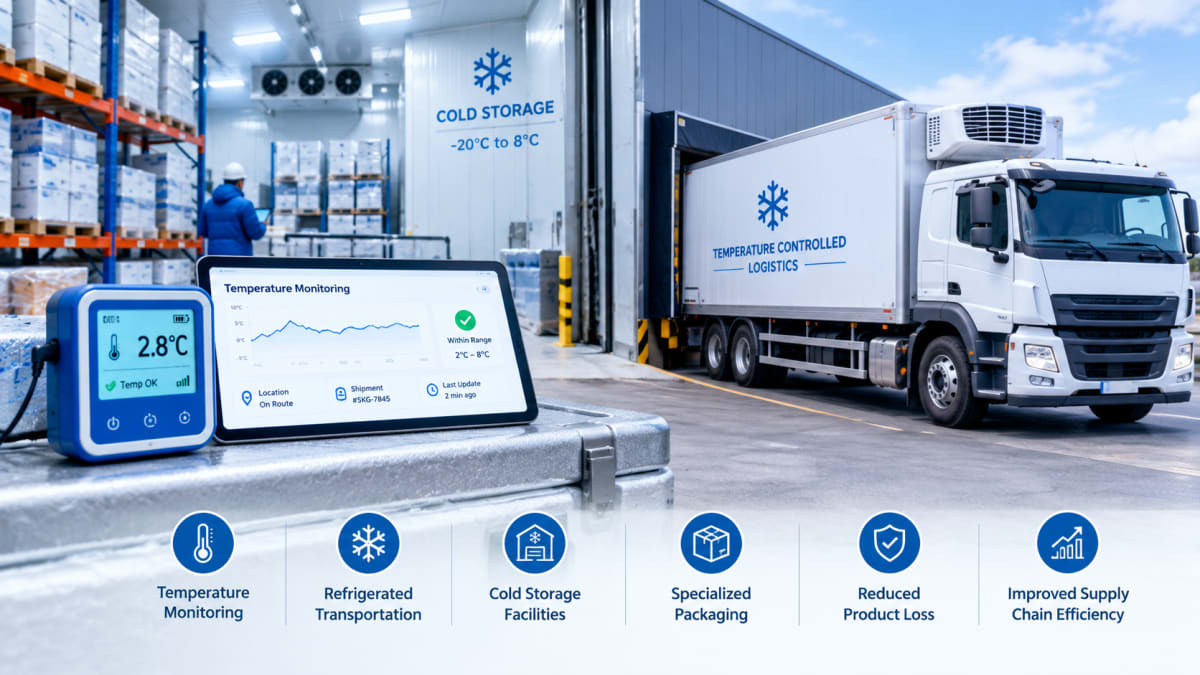
How Advanced Cold Chain Solutions Help Reduce Product Loss and Improve Supply Chain Efficiency
Introduction
Temperature-sensitive products require careful handling throughout storage, transportation, and distribution. Pharmaceuticals, vaccines, dairy products, fresh produce, seafood, and frozen foods can lose quality when exposed to unsuitable temperatures or prolonged delays.
For businesses handling these products, even a small disruption in the supply chain can result in damaged inventory, additional transportation expenses, missed delivery schedules, and customer dissatisfaction.
Advanced cold chain solutions help businesses manage these risks through improved temperature monitoring, reliable refrigeration, better inventory planning, and coordinated logistics operations. Instead of reacting only after a problem occurs, companies can use structured processes and appropriate technology to identify potential issues earlier and make informed decisions.
By improving control over temperature-sensitive shipments, businesses can reduce avoidable losses and build a more reliable supply chain.
1. Understanding the Causes of Product Loss in Cold Chain Logistics
Product loss can occur at different stages of the cold chain. Identifying the main causes is the first step toward improving operational performance.
Temperature fluctuations are a common concern. Refrigeration failures, improper loading, inadequate insulation, and extended exposure to external temperatures can affect products that require specific storage conditions.
Transportation delays can create additional risks when shipments remain in transit longer than planned. Unexpected customs inspections, port congestion, traffic disruptions, and missed delivery appointments may increase the time products spend outside their intended storage environment.
Poor inventory management can also contribute to losses. Products with limited shelf lives may expire before distribution if stock levels, demand forecasts, and delivery schedules are not properly coordinated.
Businesses should regularly review shipment records, inventory data, temperature logs, and operational incidents to understand where losses occur and which preventive measures are most effective.
2. Real-Time Temperature Monitoring for Better Shipment Control
Temperature monitoring is one of the most important elements of an effective cold chain strategy.
Traditional monitoring methods may provide information only at selected points during a shipment. In contrast, suitable digital monitoring systems can record temperatures at defined intervals and, where connectivity is available, transmit information to responsible teams during transit.
These systems can help logistics managers identify unusual temperature changes and investigate possible causes before the shipment reaches its destination.
For example, if a refrigerated shipment experiences an unexpected temperature increase, an alert may prompt the responsible team to inspect the refrigeration unit, review the vehicle's operating conditions, or arrange an appropriate intervention.
Monitoring systems should be selected according to the product's requirements, shipment duration, and operational environment. Devices also need appropriate calibration, maintenance, and data-recording procedures.
Most importantly, businesses should establish clear response protocols. A temperature alert must lead to an appropriate assessment rather than an automatic assumption that the product is either safe or unusable.
3. Smart Refrigeration and Preventive Equipment Maintenance
Reliable refrigeration equipment is essential for maintaining suitable conditions during storage and transportation.
Cold storage facilities and refrigerated vehicles depend on functioning cooling systems, adequate insulation, appropriate airflow, and regular maintenance. Equipment problems can become particularly disruptive when they occur during long-distance transportation or in locations with limited access to technical support.
Preventive maintenance helps businesses identify potential equipment problems before they interrupt operations.
Maintenance programmes may include inspecting refrigeration components, checking temperature sensors, reviewing equipment performance, cleaning relevant components, and verifying that alarms function correctly.
Where appropriate, businesses can also use equipment performance data to identify recurring faults and plan maintenance activities more efficiently.
Backup power arrangements and contingency plans can provide additional protection for facilities where an interruption could threaten product quality.
By maintaining refrigeration equipment proactively, companies can improve operational reliability and reduce the likelihood of unexpected temperature-control failures.
4. Improving Inventory Management to Reduce Expiry-Related Losses
Effective inventory management is just as important as maintaining the correct temperature.
Pharmaceutical products, dairy items, fresh produce, and other perishable goods may have limited shelf lives. If businesses store more inventory than the market requires, products may remain in warehouses for too long and become unsuitable for distribution.
On the other hand, inadequate inventory can lead to stock shortages, urgent replenishment orders, and additional transportation costs.
Businesses should combine demand forecasting, sales information, supplier lead times, and inventory records to determine appropriate stock levels.
First-expiry-first-out inventory management can help ensure that products with earlier expiry dates are prioritized for distribution, where applicable.
Warehouse management systems can also improve batch tracking, stock visibility, and coordination between procurement and distribution teams.
For international shipments, inventory planning should account for expected transit times, customs clearance, destination storage capacity, and the remaining shelf life required when products arrive.
These practices help businesses improve stock rotation, limit avoidable expiry losses, and maintain more dependable product availability.
5. Using Suitable Packaging to Protect Temperature-Sensitive Products
Packaging plays a significant role in protecting sensitive products from external temperature changes during transportation.
Depending on the product and journey, businesses may require insulated containers, temperature-controlled packaging systems, refrigerants, or other specialized packaging materials.
The correct solution depends on several factors, including the product's temperature range, shipment duration, external weather conditions, packaging configuration, and handling requirements.
Pharmaceutical shipments may require qualified packaging systems that have been evaluated for their intended use. Food shipments may need packaging designed to support the relevant refrigeration, hygiene, and handling requirements.
Businesses should avoid selecting packaging based only on purchase price. An unsuitable packaging solution may increase the risk of product damage and lead to greater overall costs.
Packaging should be selected, used, and handled according to established procedures. Where required, its performance should be validated for the expected shipping conditions.
6. Optimizing Transportation Routes and Delivery Schedules
Transportation planning can influence both product quality and the cost of cold chain operations.
Longer journeys increase the time products spend in transit and may create additional exposure to delays, handling events, and equipment-related risks.
Businesses should evaluate routes based on distance, expected transit time, traffic patterns, weather conditions, infrastructure, and the availability of suitable temperature-controlled transportation.
For international shipments, planning should also consider port congestion, customs requirements, transfer points, and the coordination of different transport providers.
Delivery schedules should allow sufficient time for necessary inspections and handling procedures without introducing unnecessary waiting periods.
Where appropriate, shipment consolidation can help improve vehicle utilization and reduce transportation costs. However, consolidation should only be used when it is compatible with product requirements, delivery deadlines, and temperature-control arrangements.
A well-planned transportation strategy can improve delivery reliability while helping businesses manage operating expenses.
7. Strengthening Coordination Between Warehouses and Transport Providers
Cold chain shipments often pass through multiple locations and involve several organizations. These may include manufacturers, suppliers, warehouse operators, freight forwarders, customs agents, transport providers, and distributors.
Poor coordination between these parties can result in delayed loading, unnecessary waiting, incomplete documentation, and gaps in temperature monitoring.
Businesses should define responsibilities for each stage of the shipment and establish clear communication procedures.
For example, warehouse teams should coordinate loading schedules with transport providers, while receiving facilities should prepare for the arrival of temperature-sensitive cargo.
Shipment documentation, product handling instructions, temperature requirements, and emergency contact details should be communicated to the relevant parties before dispatch.
Clear coordination helps minimize avoidable delays and supports a smoother transition between storage, transportation, and final delivery.
8. Applying Data Analytics to Improve Cold Chain Performance
Cold chain businesses generate useful operational information through temperature records, shipment tracking, inventory systems, maintenance logs, and delivery reports.
When reviewed together, these records can help identify recurring problems and opportunities for improvement.
For example, companies may discover that delays frequently occur at a particular transfer point or that certain routes experience higher temperature-control risks during specific seasons.
Similarly, inventory records may reveal repeated expiry-related losses or identify products that require different replenishment schedules.
Businesses can use these insights to improve route planning, adjust stock levels, revise maintenance schedules, and strengthen operational procedures.
Useful performance indicators include on-time delivery rates, temperature excursion frequency, product loss rates, equipment downtime, inventory expiry losses, and transportation costs.
Regularly reviewing these indicators helps companies evaluate whether their cold chain improvements are producing meaningful results.
9. Managing Cold Chain Costs Without Compromising Quality
Cold chain operations can involve substantial expenses related to refrigeration, energy consumption, specialized packaging, temperature monitoring, warehouse storage, and transportation.
However, reducing expenses should not come at the cost of product quality or compliance.
Businesses should evaluate the total cost of their logistics operations rather than focusing on individual expenses in isolation.
For instance, a lower-cost transportation option may not provide suitable temperature-control capabilities or reliable transit times. The resulting product losses or delays could make the overall shipment more expensive.
Similarly, investing in appropriate monitoring systems and preventive maintenance may require an initial expenditure but can help reduce avoidable disruptions over time.
Companies should compare logistics providers, review shipment utilization, plan delivery schedules carefully, and identify recurring sources of waste.
A balanced approach can help improve cost efficiency while maintaining the required handling conditions.
10. Building a More Resilient Cold Chain Strategy
A resilient cold chain requires preparation for unexpected events as well as efficient day-to-day operations.
Businesses should consider potential disruptions such as refrigeration failure, power outages, severe weather, transportation delays, customs issues, and sudden changes in demand.
Contingency plans should define how responsible teams will respond, who must be notified, and what steps are required to protect the shipment.
Depending on the operation, contingency measures may include alternative transportation arrangements, backup storage facilities, emergency maintenance support, and appropriate backup power systems.
Companies should also conduct periodic reviews of their procedures and provide training to employees responsible for temperature-sensitive cargo.
Learning from previous incidents can help businesses improve their response processes and reduce the likelihood of similar problems occurring again.
How Skylink Global Supports Efficient Logistics Planning
Efficient cold chain operations depend on reliable transportation coordination, suitable shipment planning, accurate documentation, and clear communication between supply chain partners.
Skylink Global provides logistics-related solutions to support businesses in coordinating transportation and managing supply chain activities.
Companies handling temperature-sensitive products should evaluate their cargo requirements, shipment volumes, route conditions, expected transit times, and applicable temperature-control requirements before selecting a logistics arrangement.
Clear communication with logistics partners helps establish realistic delivery expectations and ensures that product-specific handling requirements are understood before dispatch.
The right logistics strategy depends on the product, destination, transportation mode, and operational requirements of each shipment.
Conclusion
Reducing product loss in cold chain logistics requires more than refrigeration alone. Businesses need an integrated approach that combines temperature monitoring, preventive maintenance, appropriate packaging, inventory planning, transportation optimization, and effective coordination.
Digital monitoring and operational data can help companies identify risks earlier, while clear procedures ensure that problems are investigated and addressed appropriately.
By reviewing performance regularly and investing in suitable cold chain practices, pharmaceutical companies, food distributors, exporters, and other businesses can improve shipment reliability and reduce avoidable losses.
A well-managed cold chain supports product quality, efficient distribution, and a more resilient supply chain.
EXIM & Logistics Specialist at SkyLink Global Services. Specializing in statutory customs compliance, freight procurement, and international cross-border multimodal routing.