How EXIM Consultancy and Export Incentives Help Businesses Grow Internationally
Discover how EXIM consultancy and export incentive schemes help businesses simplify import-export operations, manage trade compliance, reduce eligible costs, and expand into international markets. Learn about IEC registration, RoDTEP, Advance Authorisation, EPCG, and essential export documentation.
How EXIM Consultancy and Export Incentives Help Businesses Grow Internationally
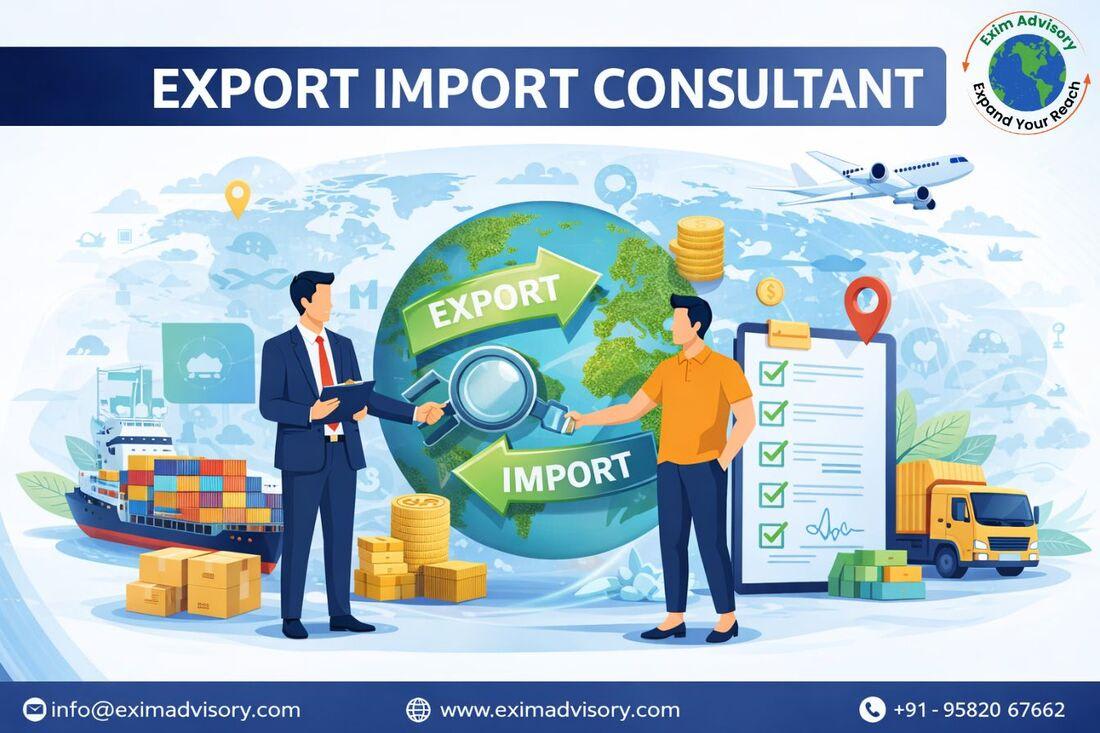
International trade creates significant opportunities for businesses looking to expand beyond domestic markets. Indian manufacturers, traders, and exporters can reach international customers, increase business revenue, and build long-term global partnerships. However, managing import-export operations requires proper documentation, regulatory knowledge, customs coordination, and an understanding of government export promotion schemes.
This is where EXIM consultancy becomes important. Professional import-export guidance helps businesses understand trade procedures, manage compliance requirements, identify applicable export incentives, and organize international shipments more effectively.
Export incentives can also support eligible businesses by reducing certain costs associated with international trade and improving their competitiveness in global markets.
1. What Is EXIM Consultancy?
EXIM stands for Export and Import. EXIM consultancy refers to professional guidance and support for businesses involved in international buying and selling of goods.
It helps businesses understand the procedures involved in importing raw materials, exporting finished products, preparing trade documents, and complying with applicable government regulations.
EXIM consultancy services may include:
Importer Exporter Code (IEC) registration and related guidance.
DGFT registration and application support.
Export and import documentation.
Customs clearance coordination.
Export incentive scheme guidance.
Advance Authorisation and EPCG consultancy.
RoDTEP and other eligible export benefit guidance.
International trade compliance support.
With proper consultancy, businesses can manage trade requirements more systematically and avoid common documentation and procedural mistakes.
2. Understanding Important Export Incentive Schemes in India
The Government of India provides different export promotion schemes to support eligible exporters and encourage international trade. Businesses should understand the purpose, eligibility conditions, and documentation requirements of these schemes before applying.
RoDTEP Scheme
The Remission of Duties and Taxes on Exported Products (RoDTEP) scheme aims to refund certain embedded central, state, and local duties, taxes, and levies that are not otherwise refunded or rebated.
Eligible exporters can claim applicable benefits according to notified product rates, value caps, and scheme conditions.
The scheme is particularly relevant for businesses looking to improve export cost competitiveness. Exporters should verify the applicable HS code, notified rate, and current DGFT guidelines before making a claim.
Advance Authorisation Scheme
The Advance Authorisation Scheme allows eligible exporters to import specified inputs without payment of applicable customs duties, subject to scheme conditions.
These inputs must be used in the production of export products, including permitted allowances for wastage.
This scheme can be useful for manufacturers who depend on imported raw materials or components for producing goods intended for international markets.
Applicants must meet the applicable export obligation and other authorisation requirements.
Export Promotion Capital Goods (EPCG) Scheme
The EPCG Scheme is designed to help eligible exporters import capital goods at zero customs duty, subject to applicable conditions and export obligations.
Capital goods may include machinery and equipment used for pre-production, production, and post-production activities.
This scheme can support businesses planning to modernize manufacturing facilities, improve production capacity, and strengthen export operations.
Other Export Promotion Benefits
Depending on the product category, business structure, and applicable policy, exporters may also explore other benefits and facilitation measures.
These may include applicable duty drawback provisions, RoSCTL for eligible textile and apparel exports, and other notified export promotion initiatives.
Not every scheme applies to every exporter or product. Eligibility must be checked against current government notifications and policy requirements.
3. Why Export Incentives Matter for Businesses
Export incentive schemes can play an important role in improving the financial efficiency of international trade operations.
Better Cost Management
Eligible export benefits can help businesses recover certain duties and taxes or reduce the cost of importing permitted production inputs.
This can improve cost planning and support more competitive export pricing.
Improved International Competitiveness
Managing eligible costs effectively can help exporters offer competitive prices to international buyers while maintaining product quality and business margins.
Support for Manufacturing Expansion
Schemes such as EPCG can help eligible businesses invest in machinery and production equipment, supporting capacity expansion and operational improvement.
Better Working Capital Planning
Certain schemes may reduce the upfront duty burden on eligible imports, helping businesses manage working capital more efficiently.
Encouragement for Export Growth
Understanding available benefits can help manufacturers, merchant exporters, and other eligible businesses make better decisions when entering new international markets.
4. Essential Documents Required for Import and Export Operations
Accurate documentation is essential for smooth international trade operations. Requirements depend on the product, country, transaction type, and applicable regulations.
Commonly required documents include:
Importer Exporter Code (IEC): An IEC is generally required for businesses undertaking import or export activities, subject to applicable exemptions.
Commercial Invoice: Provides details of the buyer, seller, goods, quantity, price, and transaction terms.
Packing List: Contains information about packages, weight, dimensions, and cargo details.
Shipping Bill: An important customs document filed for export clearance.
Bill of Lading or Airway Bill: Transportation documents issued for sea or air cargo, respectively.
Certificate of Origin: Identifies the country in which goods originate and may be required for customs or preferential trade purposes.
Registration-cum-Membership Certificate (RCMC): Required in applicable cases for export promotion council registration and certain export benefits.
Businesses should verify the exact documentation requirements before shipment to avoid delays, customs queries, and compliance issues.
5. Common EXIM Challenges Faced by Exporters and Importers
International trade involves several regulatory and operational challenges. Businesses that are unfamiliar with export-import procedures may face difficulties such as:
Incorrect or incomplete shipping documentation.
Errors in HS code classification.
Delays in customs clearance.
Difficulty understanding DGFT notifications.
Missed export incentive claim requirements.
Non-fulfilment of export obligations under authorisations.
Changes in international trade policies.
Coordination issues between suppliers, customs agents, and logistics providers.
These challenges can increase operational costs and affect delivery commitments. Proper planning, documentation review, and professional guidance help businesses manage these risks.
6. How to Choose the Right Export Incentive Scheme
Choosing an appropriate export incentive scheme requires a detailed understanding of the business and its international trade activities.
Businesses should consider the following factors:
Nature of Business: Identify whether the company is a manufacturer exporter, merchant exporter, or another eligible business category.
Product Classification: Verify the correct ITC-HS code and product-specific eligibility conditions.
Import Requirements: Businesses importing raw materials for export production may evaluate Advance Authorisation eligibility.
Machinery Requirements: Manufacturers planning to import production equipment may explore EPCG provisions.
Export Turnover and Market: Review shipment volumes, destination markets, and the financial impact of applicable benefits.
Compliance Requirements: Understand documentation, timelines, export obligations, and authorisation closure requirements before applying.
A scheme should be selected based on actual business requirements rather than assuming that every available benefit will apply.
7. How SkyLink Global Supports EXIM Consultancy and Export Operations
SkyLink Global supports businesses involved in international trade by helping them navigate export-import procedures and coordinate their logistics requirements.
Its EXIM-related support focuses on helping exporters and importers understand documentation requirements, trade compliance procedures, export incentive opportunities, and international shipping coordination.
Businesses can benefit from organized guidance relating to:
Import-export documentation and compliance.
IEC and DGFT-related procedural guidance.
Export incentive scheme assistance.
Advance Authorisation and EPCG-related guidance.
RoDTEP eligibility and documentation support.
Customs coordination and shipment planning.
International freight forwarding and logistics support.
By bringing trade-related guidance and logistics coordination together, SkyLink Global aims to help businesses manage international operations more efficiently.
8. Importance of Staying Updated with DGFT Notifications
Export promotion schemes and foreign trade regulations may change through government notifications, public notices, and policy amendments.
For example, the RoDTEP scheme has been extended through 31 December 2026 under DGFT Notification No. 41/2026-27. Its applicability, rates, and value caps remain subject to the notified conditions.
Exporters should regularly review official DGFT updates and verify the latest requirements before submitting applications or claiming benefits.
Staying informed helps businesses avoid outdated procedures, missed deadlines, and incorrect benefit calculations.
Conclusion
EXIM consultancy and export incentive schemes are important tools for businesses looking to strengthen their international trade operations. From understanding IEC requirements and managing export documentation to evaluating RoDTEP, Advance Authorisation, and EPCG, proper guidance can help exporters make informed business decisions.
However, every incentive scheme has specific eligibility criteria, documentation requirements, and compliance obligations. Businesses should evaluate these carefully before applying.
With coordinated EXIM guidance, customs support, and international logistics services, SkyLink Global helps exporters and importers approach global trade with better planning, compliance awareness, and operational efficiency.
EXIM & Logistics Specialist at SkyLink Global Services. Specializing in statutory customs compliance, freight procurement, and international cross-border multimodal routing.