
How Smart Logistics Solutions Improve Supply Chain Efficiency
Discover how smart logistics solutions help businesses improve supply chain efficiency, reduce transportation costs, streamline warehouse operations, and ensure timely deliveries. Explore the importance of technology-driven logistics, real-time shipment tracking, inventory management, and effective transportation planning in building a reliable and competitive global supply chain.
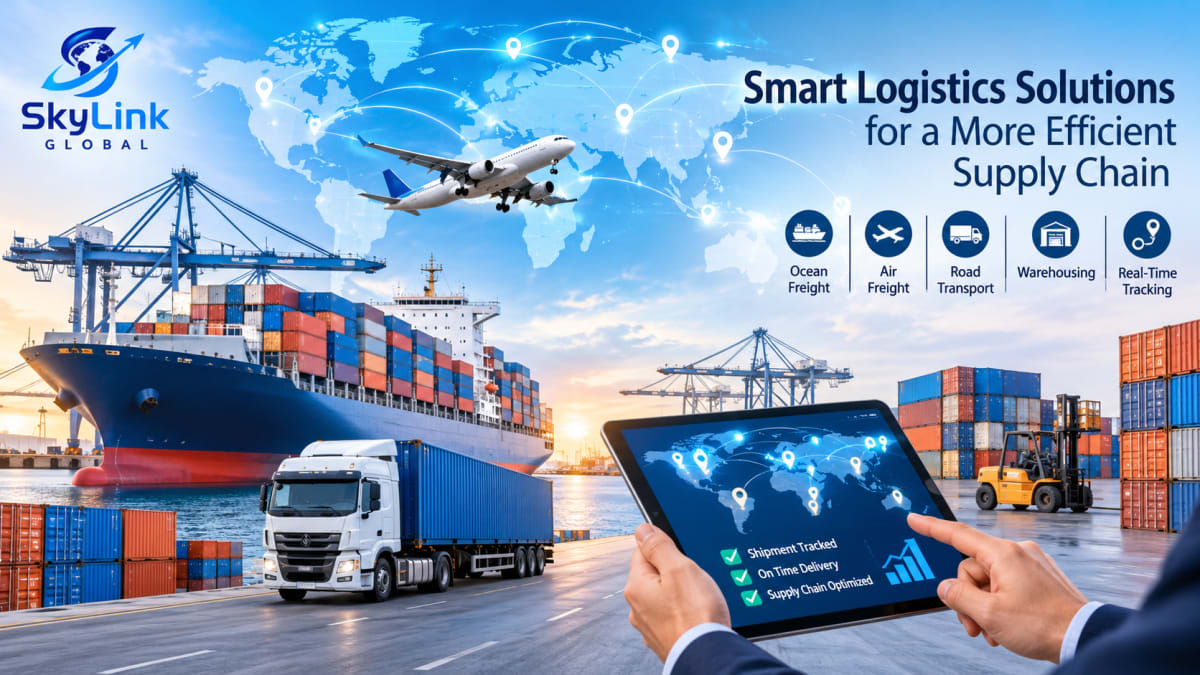
How Smart Logistics Solutions Improve Supply Chain Efficiency
In today's rapidly evolving global business environment, logistics plays a crucial role in connecting manufacturers, suppliers, distributors, and customers across different countries. As international trade continues to grow, businesses require efficient transportation systems, reliable freight services, and well-organized supply chain operations to meet customer expectations. Managing shipments across multiple locations can become challenging without proper planning, coordination, and logistics expertise.
Smart logistics solutions help businesses simplify complex transportation processes, improve shipment visibility, reduce operational expenses, and maintain a consistent flow of goods. By combining modern technology with strategic logistics planning, companies can improve their supply chain performance and build stronger relationships with international customers.
1. Understanding the Importance of Modern Logistics Management
Logistics management involves planning, implementing, and controlling the movement of goods from their original location to the final destination. It includes transportation, warehousing, inventory management, freight forwarding, cargo handling, and documentation coordination.
For businesses involved in international trade, effective logistics management is essential because shipments often pass through multiple transportation networks, ports, warehouses, and customs checkpoints.
A well-organized logistics system helps businesses maintain better control over their shipments, avoid unnecessary delays, manage transportation expenses, and ensure that products reach their destinations within the expected delivery timelines.
Modern logistics is no longer limited to moving goods from one place to another. It focuses on creating an integrated supply chain where every stage of transportation is properly coordinated.
2. Improving Transportation and Freight Management
Transportation is one of the most significant components of logistics operations. Selecting the right transportation method can directly influence delivery time, cargo safety, and overall shipping costs.
Businesses can choose from different freight transportation options depending on their shipment requirements.
Ocean Freight: Suitable for large-volume international shipments, bulk cargo, and businesses looking for economical transportation over long distances.
Air Freight: Ideal for urgent shipments, high-value products, and time-sensitive cargo requiring faster delivery.
Road Freight: Provides flexible transportation for domestic distribution, cross-border deliveries, and connecting ports with warehouses.
Rail Freight: Offers an effective transportation option for suitable inland and international cargo routes.
Multimodal Transportation: Combines two or more transportation methods to improve connectivity and manage complex shipping requirements.
Choosing the right freight solution requires an understanding of cargo dimensions, shipment weight, delivery deadlines, destination requirements, and available transportation networks.
Businesses that evaluate these factors before arranging shipments can make better transportation decisions and improve their overall logistics efficiency.
3. The Role of Real-Time Shipment Tracking
Shipment visibility is becoming increasingly important for companies managing domestic and international cargo movements. Importers and exporters need accurate information about their shipments to plan inventory, coordinate deliveries, and communicate with customers.
Real-time shipment tracking systems provide updates about cargo movement, vessel schedules, transportation milestones, estimated arrival dates, and delivery progress.
With improved tracking visibility, logistics teams can identify potential delays earlier and take appropriate action before they affect the entire supply chain.
For example, if an international shipment experiences a port delay, businesses can adjust warehouse schedules, inform customers, and reorganize their distribution plans.
Better shipment visibility also improves communication between freight forwarders, shipping companies, transport providers, suppliers, and consignees.
4. Strategies for Reducing Logistics and Freight Costs
Transportation and logistics expenses have a direct impact on business profitability. Increasing freight rates, inefficient transportation routes, port congestion, additional handling charges, and unexpected shipment delays can increase the overall cost of international trade.
Businesses should develop a structured freight cost optimization strategy to control these expenses without affecting service quality.
Some important cost-management practices include:
Comparing freight quotations from different carriers and service providers.
Selecting suitable Full Container Load (FCL) and Less than Container Load (LCL) options.
Consolidating smaller shipments wherever operationally suitable.
Planning transportation routes according to delivery requirements.
Improving container space utilization.
Monitoring detention, demurrage, and additional handling charges.
Coordinating shipment schedules to avoid unnecessary storage expenses.
Reviewing transportation performance and logistics costs regularly.
Another important consideration is understanding the total landed cost rather than focusing only on the basic freight rate. Customs duties, taxes, port charges, insurance, handling expenses, and inland transportation may also contribute to the final shipping cost.
A comprehensive cost analysis helps businesses identify opportunities for savings and make more informed logistics decisions.
5. Why Multimodal Transportation Is Important for Global Trade
International shipments frequently require more than one transportation method to reach their final destinations. Multimodal transportation provides connectivity between different modes of transport, including ocean, air, road, and rail.
For example, goods manufactured in an inland industrial area may first travel by road to a seaport. From there, the cargo may move through ocean freight to an international destination and finally reach the consignee through road or rail transportation.
This integrated approach helps businesses manage transportation across multiple locations while maintaining better coordination between logistics partners.
Multimodal transportation can offer several advantages:
Improved connectivity between domestic and international markets.
Greater flexibility in selecting transportation routes.
Better coordination of cargo movement.
Opportunities to optimize overall transportation expenses.
Suitable transportation combinations for different cargo requirements.
Improved access to international trade destinations.
However, successful multimodal operations require proper scheduling, documentation, cargo handling coordination, and communication between all transportation partners.
6. Technology and Digital Transformation in Logistics
Technology is changing how modern supply chains operate. Traditional logistics processes that once depended heavily on manual communication and paperwork are increasingly supported by digital platforms and automated systems.
Businesses can use logistics technology to monitor shipments, organize transportation schedules, manage inventory, and improve communication across different operational departments.
Some important technologies supporting modern logistics include:
Transportation Management Systems (TMS): These platforms help businesses organize transportation activities, compare routes, manage freight operations, and monitor shipping performance.
Warehouse Management Systems (WMS): Digital warehouse solutions help track inventory, organize storage locations, manage product movement, and improve order fulfillment.
Artificial Intelligence and Data Analytics: Advanced analytics can help identify transportation patterns, forecast shipment requirements, evaluate operational performance, and support better planning decisions.
Digital Documentation: Electronic documentation systems help organize shipping records, reduce repetitive paperwork, and improve information accessibility.
Automated Tracking Solutions: Digital tracking tools provide shipment updates and improve visibility across different transportation stages.
By adopting suitable technologies, businesses can reduce manual errors, improve operational transparency, and make their supply chains more responsive to changing market conditions.
7. Efficient Warehousing and Inventory Management
Warehousing and inventory management are important parts of a successful logistics strategy. Poor inventory planning can create unnecessary storage expenses, product shortages, delayed deliveries, and difficulties in fulfilling customer orders.
An efficient warehouse operation ensures that goods are received, stored, organized, and dispatched according to business requirements.
Companies should maintain accurate inventory records and coordinate warehouse activities with transportation schedules. This helps prevent unnecessary stock accumulation and improves the movement of goods throughout the supply chain.
Modern inventory management systems also provide better visibility into available stock, incoming shipments, outgoing orders, and storage requirements.
For businesses handling international shipments, warehouse coordination becomes particularly important because delays in cargo arrival or distribution can affect the entire delivery schedule.
8. Customs Clearance and International Shipping Documentation
Customs clearance is another essential stage of international logistics operations. Every country has specific import and export regulations, documentation requirements, and procedures that businesses must follow.
Incomplete or inaccurate shipping documents may result in customs queries, cargo examination, clearance delays, and additional expenses.
Depending on the nature of the shipment and applicable regulations, important documents may include:
Commercial Invoice
Packing List
Bill of Lading or Airway Bill
Shipping Bill
Certificate of Origin
Applicable customs declarations and supporting certificates
Businesses should ensure that shipment information, product descriptions, declared values, quantities, and other relevant details are accurate and consistent.
Proper coordination with customs professionals and logistics service providers helps importers and exporters prepare documentation more effectively and manage cross-border shipping requirements.
9. Building a Reliable and Resilient Supply Chain
Global supply chains can be affected by several unexpected challenges, including port congestion, adverse weather, transportation disruptions, changing regulations, and fluctuations in freight rates.
Businesses should therefore develop supply chain strategies that can respond to unexpected situations.
Maintaining alternative transportation arrangements, working with reliable logistics partners, monitoring shipment progress, and planning inventory requirements can help reduce operational risks.
Cargo insurance and appropriate risk-management practices are also important considerations for protecting goods during transportation.
A resilient supply chain does not simply focus on avoiding delays. It also ensures that businesses can respond effectively when unexpected disruptions occur.
10. Choosing the Right Global Logistics Partner
Selecting an experienced logistics partner can make a significant difference in managing international shipments. Businesses should evaluate service capabilities, transportation networks, operational transparency, communication, documentation support, and experience with different cargo requirements.
A reliable logistics partner should understand the specific needs of importers and exporters and provide suitable transportation solutions based on shipment size, destination, delivery timelines, and budget.
SkyLink Global focuses on supporting international trade and cargo movement through logistics and shipping solutions, including ocean freight, air freight, multimodal transportation, shipment coordination, and freight management.
With an organized approach to transportation planning and supply chain coordination, businesses can manage their shipping requirements more effectively and improve their international logistics operations.
Conclusion
Smart logistics solutions have become an essential part of modern international business operations. From transportation planning and freight cost optimization to shipment tracking, warehouse management, and customs documentation, every stage contributes to overall supply chain performance.
Businesses that invest in efficient logistics processes and suitable digital technologies can improve shipment visibility, control operational expenses, and respond more effectively to changing market demands.
As international trade continues to expand, adopting a well-planned logistics strategy and partnering with experienced service providers can help businesses establish stronger supply chains, improve delivery performance, and build long-term growth opportunities in global markets.
SkyLink Global aims to support businesses with dependable logistics and transportation solutions that help simplify international cargo movement and strengthen global trade connectivity.
EXIM & Logistics Specialist at SkyLink Global Services. Specializing in statutory customs compliance, freight procurement, and international cross-border multimodal routing.